By Robert Skinner | Delta City News | June 25, 2026
Subscribe Free To Delta City News:
Click Here!

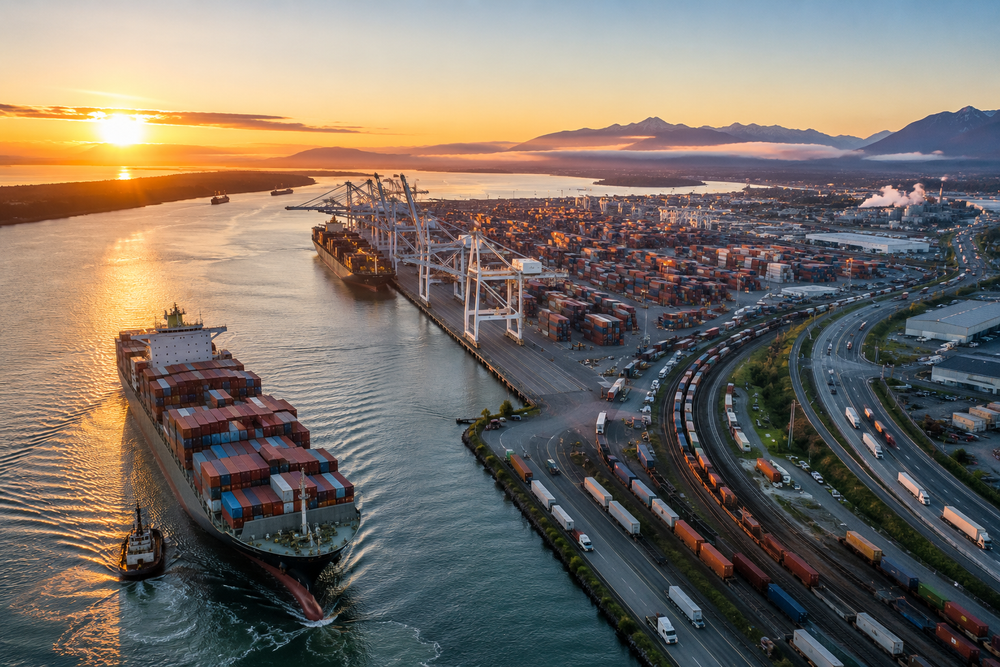
Every day, ships arriving at Delta's port facilities carry far more than shipping containers.

They carry the products that keep Canadian businesses operating, store shelves stocked and manufacturers supplied. From electronics and automobiles to food products and construction materials, billions of dollars in international trade pass through Delta each year.

The recent seizure of 520.6 kilograms of concealed opium demonstrated that organized crime continues to target international supply chains.

It also highlighted something equally important.

Border security is not about stopping trade.

It is about protecting it.

A Gateway That Canada Depends On

Delta sits at the centre of Canada's Pacific trade network.

Its marine terminals connect Canadian businesses with markets throughout Asia and the Pacific Rim while serving as one of the country's most important entry points for imported goods.

The overwhelming majority of cargo arriving through Delta is completely legitimate.

Every container delayed unnecessarily increases transportation costs, disrupts supply chains and can affect businesses and consumers across Canada.

That creates a difficult balancing act.

Security agencies must identify the small number of high-risk shipments while allowing legitimate commerce to move efficiently.

Intelligence Instead of Delay

Years ago, border inspections often depended on random examinations and manual searches.

Today's system is far more sophisticated.

Intelligence analysts review shipping information before vessels even arrive in Canadian waters.

Advanced analytics, international intelligence sharing, detector dog teams and imaging technology help officers identify cargo that deserves closer examination.

That means resources can be focused where they matter most without bringing trade to a halt.

The recent Delta seizure illustrates exactly how that approach works.

One container was identified from among thousands moving through the port because intelligence suggested it presented an elevated risk.

Protecting Canada's Economy

Border security is often viewed through the lens of public safety.

It is equally important to Canada's economy.

Canadian exporters depend on efficient ports to reach international customers.

Importers depend on reliable delivery schedules.

Manufacturers rely on predictable supply chains.

If organized crime were allowed to undermine confidence in Canada's trade gateways, the economic consequences would extend far beyond the ports themselves.

Maintaining both security and efficiency helps preserve Canada's reputation as a trusted trading nation.

Technology Will Continue to Evolve

As international trade continues to grow, border agencies are increasingly turning to technologies such as artificial intelligence, predictive analytics and enhanced cargo imaging to identify unusual shipping patterns.

These tools are designed to improve precision rather than increase disruption.

The goal is not to inspect more containers.

The goal is to inspect the right containers.

That approach benefits both public safety and legitimate commerce.

Why It Matters to Delta

For many residents, the port is simply part of the local landscape.

Yet every day, thousands of workers, truck drivers, railway employees, customs officers, terminal operators and logistics professionals help keep one of Canada's most important transportation hubs operating safely and efficiently.

The recent drug seizure reminds us that protecting the border is about much more than intercepting illegal narcotics.

It is about safeguarding a trade gateway that supports businesses, jobs and communities across the country.

For Delta, that responsibility is carried out every day—quietly, professionally and largely out of public view.


Why It Matters

The success of Canada's Pacific Gateway depends on achieving two objectives at the same time: facilitating legitimate international trade while preventing criminal organizations from exploiting global supply chains.

The recent CBSA operation demonstrates that modern border security is no longer simply about inspections at the border. It is about intelligence, technology, international cooperation and highly trained professionals working together to protect both Canada's economy and its communities.


Inside Delta

Protecting Canada's Pacific Gateway – Part 3

This concludes Delta City News' three-part Inside Delta series examining the historic 520.6-kilogram opium seizure and the sophisticated systems that help protect one of Canada's busiest international trade gateways.

Series Recap

  • Part 1: Historic 520.6 kg Opium Seizure Highlights Delta's Role in Protecting Canada's Borders
  • Part 2: How Border Officers Found One Suspicious Container Among Thousands
  • Part 3: Billions in Trade, Millions of Containers—Why Security and Commerce Must Work Together

Robert Skinner – Publisher

Delta City News — Licensed Partner of the WBN News Network

Robert is a Ladner-based business systems developer and Publisher of Delta City News.

Connect with Robert on LinkedIn:
https://www.linkedin.com/in/rlskinner/

Subscribe Free To Delta City News
https://deltacity.news/subscribe/?fpr=robert10

We're Looking For Citizen Journalists

If you have a passion for your community and would like to help tell Delta's stories, we'd love to hear from you. Part-time contributor opportunities are available, and ChatGPT-assisted journalism training is provided for qualified applicants.

Apply To Be A News Contributor Here


Tags: #Delta City News #Delta BC #Inside Delta #Pacific Gateway #Border Security #CBSA #International Trade #Supply Chain #Infrastructure #Port Of Vancouver #Community News

Share this article
The link has been copied!