
Who’s Really Paying For FIFA? The Dollars Behind Vancouver’s World Cup
A closer look at who is funding Vancouver’s FIFA World Cup costs and whether the expected economic benefits justify the investment.

A closer look at who is funding Vancouver’s FIFA World Cup costs and whether the expected economic benefits justify the investment.
By Karalee Greer |Vancouver City News| June 25, 2026
Subscription to WBN and being a Contributor is Free
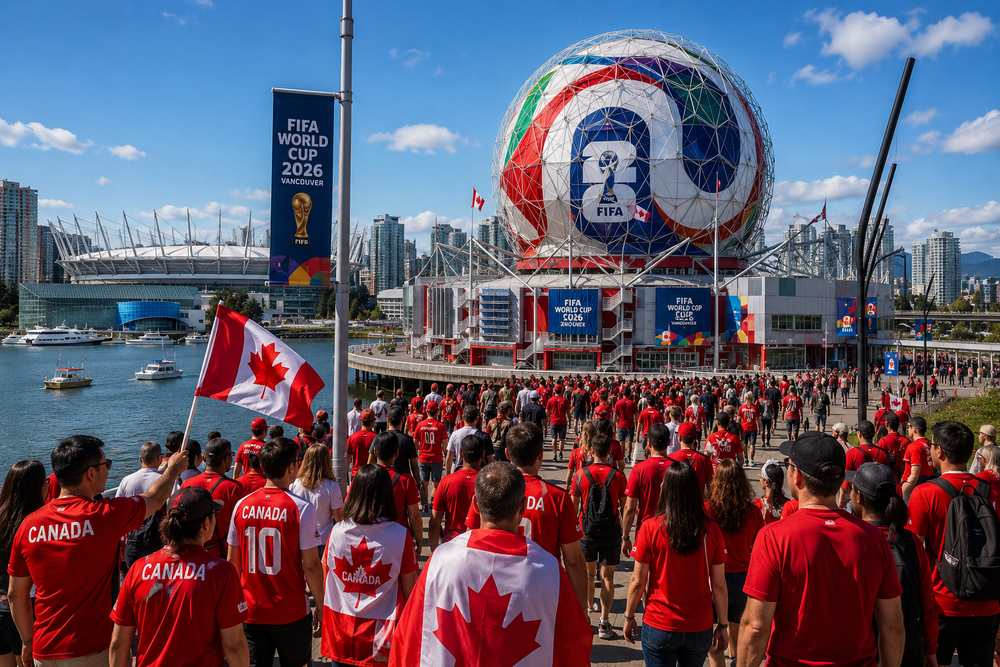
Vancouver’s FIFA World Cup moment is being sold as a global showcase, but the financial story is more complicated. Hosting seven matches brings tourism, media attention, and business opportunity, while also leaving taxpayers, governments, hotels, and local businesses tied to the bill.
Vancouver is one of Canada’s two host cities for the 2026 FIFA Men’s World Cup, alongside Toronto. Canada is hosting 13 matches in total, with seven scheduled for Vancouver and six for Toronto.
The public cost of hosting has become one of the most closely watched parts of the event. The Province of British Columbia says the gross cost of Vancouver’s seven matches is now estimated between $685 million and $729 million, while projected net core and essential provincial costs have been reduced to a high of $114 million, down from a previous high estimate of $145 million.
That gap between gross cost and net cost is where the real story begins.
The cost is not coming from one source.
Money is expected to come from several places, including the Province of British Columbia, the City of Vancouver, the federal government, BC Pavilion Corporation, event revenues, sponsorships, and accommodation tax revenues.
The provincially established Major Events Municipal and Regional District Tax has become one of the most important funding tools. It is a 2.5% hotel tax paid by travellers staying in Vancouver hotels and is expected to help offset hosting costs.
That means visitors are helping pay for the event, but taxpayers still carry risk if costs rise or projected revenues fall short.
Vancouver will host seven FIFA World Cup 2026 matches.
British Columbia’s gross hosting cost estimate is $685 million to $729 million.
Projected net provincial hosting costs are now estimated between $90 million and $114 million.
The Parliamentary Budget Officer estimates total Canadian government support for the 2026 FIFA Men’s World Cup at $1.066 billion, with $473 million from the federal government and $593 million from other levels of government.
The PBO estimate works out to about $82 million per Canadian match.
A major event of this size is not simply about opening the stadium doors.
Costs include security, transportation planning, operations, venue preparation, fan zones, emergency services, communications, staffing, traffic management, and public infrastructure support.
Security is one of the largest cost areas. Federal funding is expected to help cover essential services, including safety and security requirements connected to the tournament.
BC Place and the surrounding downtown event zone also require planning and operational support. That includes preparing the stadium, managing crowds, coordinating transit and road access, and meeting FIFA requirements for hosting.
The most obvious beneficiaries are businesses close to the action.
Hotels, restaurants, bars, souvenir shops, transportation providers, event contractors, and downtown hospitality operators are best positioned to benefit from increased visitor traffic.
Reuters reported that the World Cup has produced uneven outcomes for Vancouver businesses, with some shops near BC Place seeing strong tourist activity while others outside the core or affected by access issues have struggled.
That matters because the economic benefit is not spread evenly across the city.
A restaurant near BC Place may see a surge. A business in Kitsilano, Commercial Drive, South Granville, or Mount Pleasant may see little direct lift unless visitors intentionally move beyond the event zone.
Public agencies carry much of the upfront risk.
Governments must pay for security, planning, infrastructure, and public services whether or not projected visitor spending fully appears. If hotel tax revenues, sponsorship income, or event revenues underperform, the public side may be left covering more of the cost.
This is why gross cost and net cost both matter.
The gross cost shows the scale of the event. The net cost shows what remains after expected revenues and contributions are applied. But the final net cost will only be known after the tournament, when actual revenues, expenses, and economic impacts are measured.
For Vancouver businesses, the key question is not whether the World Cup brings attention.
It will.
The better question is who can convert that attention into real revenue.
Businesses near BC Place, downtown hotels, tourism operators, restaurants, and entertainment venues have the clearest path to benefit. But many smaller businesses may need their own strategy to participate, whether through local promotions, extended hours, partnerships, visitor-friendly offers, or event-adjacent programming.
Without that strategy, the World Cup may happen around them rather than for them.
For taxpayers, the question is whether the long-term benefit justifies the public investment.
Supporters argue that global exposure, tourism activity, infrastructure improvements, and business opportunities create value beyond match days. The Province has pointed to hospitality, entertainment, and long-term destination branding as part of the return.
Critics argue that mega-events often overpromise economic gains, concentrate benefits in certain sectors, and leave governments responsible for costs that are easier to measure than long-term benefits.
Both views can be true at the same time.
The World Cup may create real value for Vancouver. It may also create uneven results.
The debate is often framed too simply.
It is not just “taxpayers pay” or “tourists pay.”
It is a layered funding structure where hotel taxes, federal transfers, provincial spending, municipal involvement, event revenues, and business activity all interact.
It is also a timing issue.
Governments spend before the full benefit is known. Businesses prepare before demand is guaranteed. Residents deal with congestion and disruption immediately, while long-term economic gains may take years to evaluate.
That makes transparency essential.
The most important accounting will happen after the tournament.
That is when Vancouver will be able to compare projected benefits with actual outcomes, including hotel activity, restaurant spending, tourism growth, tax revenues, transit demand, business disruption, and long-term investment interest.
The best-case outcome is that Vancouver uses the World Cup as a global platform that leaves lasting value.
The risk is that benefits are concentrated, temporary, and difficult to separate from normal tourism activity.
Mega-events are no longer just about sports.
They are business tests, public finance tests, tourism tests, and city-branding tests.
For Vancouver, the FIFA World Cup is an opportunity to welcome the world. It is also a reminder that global attention comes with a price, and that price is shared across taxpayers, governments, visitors, businesses, and residents.
The real question is not whether Vancouver can host the World Cup.
It can.
The real question is whether the city can turn a costly global moment into long-term value.
The following sources were used to verify facts referenced in this article:
By: Karalee Greer LinkedIn: https://www.linkedin.com/in/karalee/
Helping entrepreneurs and organizations better understand the trends shaping business, technology, communities, and the economy. Through WBN News and its growing network of local and global editions, Karalee connects readers with practical insight that explains not only what is happening, but why it matters.
Subscription to WBN and being a Contributor is Free
Tags: #FIFA World Cup 2026 #Sports Business #BC Tourism #Economic Development #Delta City News #Karalee Greer