By Robert Skinner | Delta City News | July 6, 2026
Subscribe Free To Delta City News: Click Here!
Roberts Bank is no longer just a Delta port story. New federal support places the terminal at the centre of Canada’s plan to expand trade, reduce bottlenecks, and reach more overseas markets.
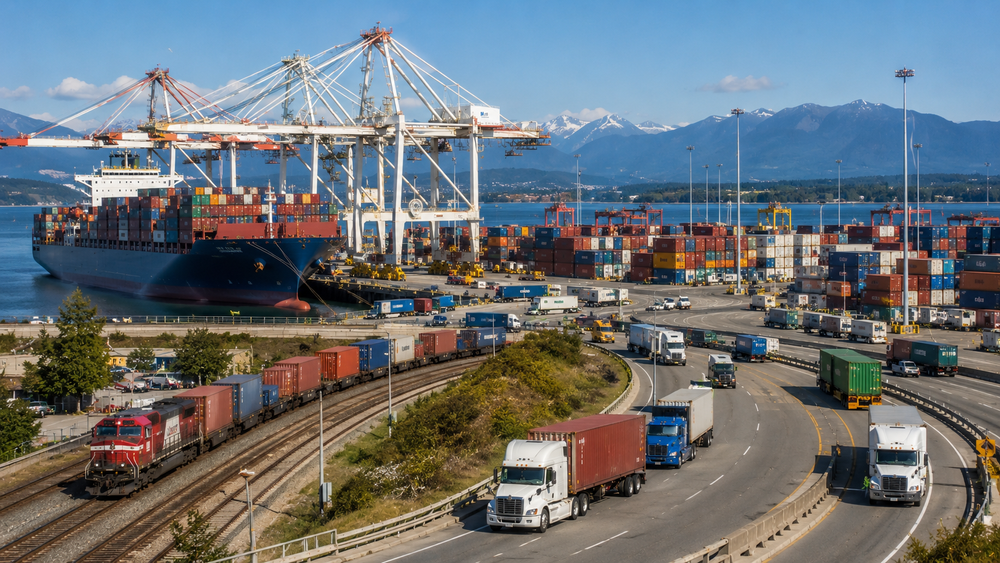
Delta’s Roberts Bank has moved from regional infrastructure project to national economic priority.
Following the Canada–British Columbia Cooperative Prosperity Agreement, Ottawa has committed to major infrastructure upgrades tied to the Roberts Bank trade corridor. The federal government says the investment could unlock more than $100 billion in new trade capacity and add about $3 billion annually to Canada’s economy.
What Happened
Roberts Bank Terminal 2 is a planned three-berth marine container terminal in Delta, next to existing port operations. The project is designed to add 2.4 million TEUs of annual container capacity, giving Canada more room to move imports and exports through the Pacific Gateway.
The federal government approved the project in 2023, subject to 370 legally binding conditions covering environmental protection, wildlife, Indigenous land-use activities, marine species, and monitoring.
Now, the project has gained new urgency. Ottawa and B.C. are positioning Roberts Bank as part of a larger national plan to grow non-U.S. exports and strengthen Canada’s access to Asian and global markets.
Local Impact
For Delta, this is a defining economic moment.
Roberts Bank links container shipping, rail, trucking, Highway 17, Highway 99, Tilbury, Tsawwassen First Nation lands, and the broader Lower Mainland logistics network. If the corridor expands as planned, Delta will carry more of Canada’s trade burden.
That could mean more construction work, logistics jobs, warehousing demand, port-related business, and industrial investment. It will also raise serious local questions about truck traffic, road capacity, environmental protection, and how benefits are shared with the community.
By The Numbers
- 2.4 million TEUs of added annual container capacity
- Three new container berths planned
- 370 legally binding federal conditions
- More than $100 billion in projected new trade capacity
- About $3 billion in added annual economic activity
- More than 30 per cent increase in Canada’s west coast container capacity cited by Infrastructure BC
Strategic Implications
Roberts Bank matters because ports are now part of national security, not just commerce.
Canada wants to sell more goods to markets beyond the United States. That requires ports that can move larger volumes without chronic congestion. The Port of Vancouver is already Canada’s largest port by trade value, and federal officials have warned that west coast port capacity will become a major issue without expansion.
Environmental and Indigenous concerns remain central. Tsawwassen First Nation has stated concern about Roberts Bank Terminal 2 and expects meaningful consultation and thorough impact assessment for major projects near its territory.
Why It Matters
Most people see Roberts Bank as a port.
Business leaders should see it as a pressure point in Canada’s trade future.
If Roberts Bank expands successfully, Delta becomes more important to exporters, importers, shipping firms, builders, warehouse operators, and governments. If the project stalls, Canada risks tighter port capacity, weaker trade flexibility, and more pressure on existing transportation corridors.
This is why Roberts Bank has become one of Canada’s most important ports. It is not only about containers. It is about whether Canada can move goods fast enough to compete.
Series: Delta At The Centre Of Canada’s New Trade Economy
Robert Skinner - Publisher Delta City News
WBN News – Real-Time Intelligence For Business
Delta City News — Licensed Partner of the WBN News Network
Robert is a Ladner-based business systems developer and Publisher of Delta City News.
Connect with Robert on LinkedIn:
https://www.linkedin.com/in/rlskinner/
Subscribe Free To Delta City News: Click Here!
We're Looking For Citizen Journalists
If you have a passion for your community and would like to help tell Delta's stories, we'd love to hear from you. Part-time contributor opportunities are available, and ChatGPT-assisted journalism training is provided for qualified applicants.
Apply To Be A News Contributor Here
Tags: #Delta City News #Roberts Bank #Port Of Vancouver #Trade Corridor #Infrastructure #Delta BC #Transportation #Economic Development #Tsawwassen First Nation #Business News
FACT CHECK REVIEW
Dates: Federal approval for Roberts Bank Terminal 2 was announced April 20, 2023. The Canada–British Columbia Cooperative Prosperity Agreement was announced July 2, 2026.
Names: Mark Carney, David Eby, Roberts Bank Terminal 2, Vancouver Fraser Port Authority, Port of Vancouver, and Tsawwassen First Nation were verified through official and primary sources.
Organizations: Government of Canada, Impact Assessment Agency of Canada, Infrastructure BC, Vancouver Fraser Port Authority, and Tsawwassen First Nation were verified.
Numbers: The 2.4 million TEU capacity figure, 370 federal conditions, more than $100 billion in trade capacity, and approximately $3 billion annual economic contribution were verified through official or infrastructure sources.
Timelines: Construction and operating timelines remain subject to procurement, permitting, and final project schedules.
Quotations: No direct quotations used.
Facts vs Analysis: Project size, approval conditions, and funding claims are factual. Statements about Delta’s rising strategic importance are analysis based on the project’s location and trade role.
Assumptions: The article assumes Roberts Bank Terminal 2 and related corridor upgrades proceed substantially as planned.
Uncertainties: Final construction timelines, final costs, community benefits, environmental outcomes, and traffic impacts remain uncertain.
Disputed Claims: Environmental impacts and mitigation effectiveness remain contested by some environmental and community groups.