By Robert Skinner | Delta City News | November 2, 2026

Please Subscribe for Free To Delta City News: Click Here!

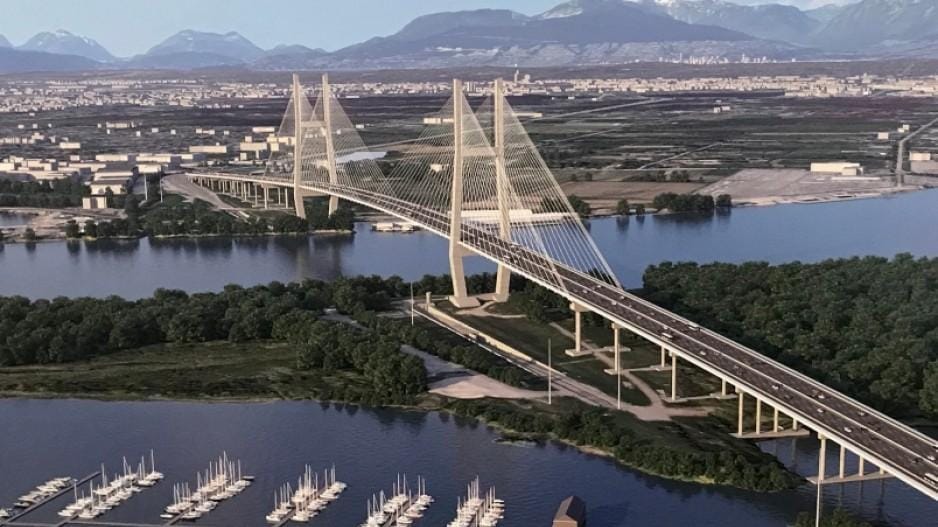
After nearly a decade of changing plans, escalating costs and growing frustration, BC's incoming Conservative government promises a 10-lane bridge instead of an eight-lane tunnel. But can the province finally deliver?

For thousands of Delta and Richmond residents who travel Highway 99 every day, the George Massey Tunnel has become a familiar source of frustration.

Morning traffic heading north, afternoon congestion heading south, commercial trucks moving goods to and from the port, and motorists trying to reach Vancouver International Airport all share a crossing that opened in 1959.

Now, after years of debate and billions of dollars in proposed spending, British Columbia is preparing to change direction once again.

The newly elected Conservative government, led by Premier-elect Lorne Doerkson, has committed to abandoning the planned eight-lane immersed-tube tunnel in favour of a new 10-lane bridge across the Fraser River.

The Conservatives argue that a bridge can be built faster, provide greater capacity and save taxpayers billions of dollars.

For Delta residents, however, the announcement raises an obvious question:

After nearly a decade of changing plans, is the province finally on the road to delivering a new crossing — or beginning another lengthy round of planning and political debate?

A project that has come full circle

The idea of replacing the George Massey Tunnel with a bridge is hardly new.

In 2013, the BC Liberal government under Premier Christy Clark announced plans to replace the aging four-lane tunnel with a modern 10-lane bridge.

The proposal included major Highway 99 improvements, upgraded interchanges and dedicated transit capacity.

By 2017, planning and design work had advanced significantly, and construction was expected to begin that year. The bridge was originally scheduled to open in 2022.

But the project changed dramatically when John Horgan's NDP government took office in 2017.

The bridge was cancelled, and the province eventually selected an eight-lane immersed-tube tunnel as its preferred replacement.

The NDP argued that the tunnel offered important benefits, including a toll-free crossing, improved transit facilities and an approach more compatible with regional transportation and land-use priorities.

Supporters of the bridge criticized the cancellation, arguing that years of planning and construction opportunities had been lost.

Nearly a decade later, the political direction has reversed again.

Why the Conservatives recommend a bridge

On October 15, 2026, Conservative leader Lorne Doerkson announced that his party would revive the 10-lane bridge proposal if elected. And they were.

Following the Conservatives' October 24 election victory, the incoming government has reaffirmed that commitment.

The case for returning to a bridge rests on three important considerations: cost, construction, timeline and long-term structural reliability.

The incoming Conservative government argues that a 10-lane bridge could be constructed at substantially lower cost than the proposed tunnel, potentially completed sooner, and provide a dependable transportation connection for decades to come.

For Delta residents and businesses, all three considerations are important.

The existing Massey Tunnel has been a source of congestion and travel uncertainty for years. Commuters, commercial truck operators and businesses need more than additional traffic lanes. They need a crossing that provides predictable travel times, withstands major seismic events and can be maintained without excessive disruption.

The question is whether a new bridge can deliver those benefits more effectively than the planned eight-lane tunnel.

The financial argument is significant, particularly following the increase in the tunnel project's estimated cost to $8.5 billion. However, claims of faster completion and improved long-term reliability also require careful examination.

Ultimately, the best choice should be determined not simply by the initial construction price, but by the total cost, time to completion and performance of the crossing over its expected operating life.

The previous NDP government's tunnel project was originally estimated at approximately $4.15 billion. By July 2026, the estimated cost had risen to $8.5 billion.

The province attributed the increase to construction inflation, market conditions, project scope and scheduling requirements.

Conservative representatives maintain that a bridge could cost approximately $5 billion less than the tunnel.

Delta South MLA Ian Paton, a longtime advocate of replacing the existing crossing, told Local News on October 30 that the bridge could also be completed within five years.

He argued that the previous bridge's engineering and environmental assessment work could help accelerate the project.

However, the new government has not yet published an updated bridge construction budget or independently verified completion schedule.

The distinction is important.

The former bridge's estimated cost of $3.5 billion was developed almost a decade ago. Construction costs, materials, labour availability and regulatory requirements have changed considerably since then.

Whether the province can deliver the promised savings will depend on a new and detailed business case.

The tunnel project is already underway

Although the new immersed-tube tunnel itself has not yet entered major construction, the project is considerably further along than a simple planning exercise.

Since January 2026, work has included clearing land, relocating utilities, preparing access roads, carrying out geotechnical investigations and developing construction facilities on Deas Island.

Preparations have also been underway for a specialized casting basin where the tunnel's concrete sections would have been manufactured.

According to the province's Highway 99 Tunnel Program, construction activities have included retaining walls, temporary infrastructure, earthworks and preparations for the replacement of the Deas Slough Bridge.

That work represents a substantial investment of public money.

Some of it may be useful regardless of whether a bridge or tunnel is constructed.

Other work, particularly infrastructure designed specifically for an immersed-tube tunnel, may have little value under a bridge proposal.

The province has not yet provided a verified public accounting of how much tunnel-related spending would become redundant.

This is one of the most important unanswered questions surrounding the government's decision.

Ottawa signals support for the change

One significant development occurred on October 30, when federal Transport Minister Steven MacKinnon expressed support for the incoming provincial government's preferred crossing.

The federal government had previously committed up to $3 billion toward the eight-lane tunnel project.

There had been concerns that abandoning the tunnel might jeopardize that contribution.

However, during an announcement in Delta concerning the Roberts Bank Terminal 2 project, MacKinnon indicated that Ottawa would support a bridge if that was the direction chosen by British Columbia.

He also emphasized the importance of improving transportation corridors serving the Lower Mainland and Canada's international trade network.

While this represents a significant political endorsement, the precise amount and terms of federal funding for a bridge have not yet been finalized publicly.

Nevertheless, federal willingness to support the new direction could remove one of the largest obstacles to the proposal.

Delta's representatives see an opportunity

For Delta South MLA Ian Paton, the return to a bridge represents a position he has advocated for years.

Paton has repeatedly criticized the cancellation of the original bridge project and the delays and cost increases associated with the replacement tunnel.

He maintains that Delta residents have waited far too long for meaningful relief from Highway 99 congestion.

Delta's newly elected mayor, Melissa Granum, has also expressed support for a bridge, provided the incoming government can substantiate its claims about cost and construction time.

Her position introduces an important element into the discussion: support for a bridge does not necessarily mean accepting every promise associated with the project.

The coming months will reveal how effectively Delta's municipal and provincial representatives can work together to advance the crossing.

The interests of Richmond, regional transportation agencies, port operators, agricultural landowners and nearby communities will also need to be considered.

Not everyone welcomes another change

The announcement has also generated concerns.

Construction workers currently involved in the tunnel project face uncertainty about their employment.

Representatives of the International Union of Operating Engineers have warned that approximately 200 workers could be affected if existing construction activities are cancelled before bridge construction begins.

There are also questions about whether previous environmental approvals and engineering studies can be transferred directly to a revised bridge design.

A bridge could introduce different environmental, agricultural land, visual and community impacts from those associated with an immersed-tube tunnel.

Supporters of the tunnel have also emphasized its planned dedicated transit lanes, active transportation facilities and toll-free operation.

Any new bridge proposal will need to demonstrate how those transportation needs will be accommodated.

The choice involves more than comparing the number of vehicle lanes. It requires an examination of long-term transportation capacity, safety, environmental impacts and financial value.

What does this mean for Delta residents?

For South Delta residents, the Massey crossing is an essential connection to Richmond, Vancouver and the wider Lower Mainland.

For North Delta residents and local businesses, the crossing is also part of a regional transportation network that affects commercial deliveries, employment opportunities and the movement of goods.

Delta's agricultural industry depends on reliable transportation routes, while Deltaport and the expanding Roberts Bank trade facilities require efficient highway access.

Congestion at the tunnel affects more than the drivers waiting in line.

It affects business productivity, transportation costs, emergency response planning and the region's ability to accommodate future economic growth.

A new crossing could provide substantial benefits, but those benefits will depend on the complete transportation design, not simply whether vehicles travel over or under the Fraser River.

The real test begins now

The Conservatives have made a clear political commitment.

But there is a difference between announcing a bridge and building one.

Before construction can proceed, the government will need to confirm the bridge's design, update cost estimates, determine what existing tunnel work can be reused, address outstanding contracts and establish the necessary environmental and regulatory approvals.

It will also need to negotiate the final federal funding arrangements.

The previous tunnel project had an official completion target of 2031.

Ian Paton's suggested five-year bridge timeline could produce a similar opening date, but that projection has not yet been established through a new construction schedule.

For Delta residents, the ultimate measure of success will not be which political party selected the crossing.

It will be whether the province can deliver a safe, reliable and financially responsible replacement within a reasonable time.

A new chapter — and some familiar questions

The George Massey Tunnel replacement has now experienced years of planning, a cancelled bridge, a new tunnel proposal, escalating costs and another major political reversal.

The return to a 10-lane bridge may ultimately prove to be the right decision.

But that conclusion will require evidence.

How much will it actually cost? How quickly can it be built? What will happen to money already invested in the tunnel? And will the final project meet Delta's transportation needs for generations to come?

Those questions deserve answers before taxpayers are asked to embrace another major change in direction.

For Delta residents, the priority remains what it has always been: replace an aging, congested crossing with a modern transportation connection — and finally get the job done.


Coming tomorrow — Part 2

The Cost of Changing Course: What Happens to the Tunnel Investment?

Construction preparations are already underway, but how much has been spent, what can be reused and what could become an expensive write-off?

Tomorrow, Delta City News examines the financial implications of abandoning the tunnel and returning to a bridge.


Robert Skinner - Publisher

Delta City News — Licensed Partner of the WBN News Network providing independent community and business reporting covering the people, infrastructure and issues shaping Delta.

Robert is a Ladner-based business systems developer and Publisher of Delta City News. Connect with Robert on: https://www.linkedin.com/in/rlskinner/

You can Subscribe for Free To Delta City News: Click Here!

Also Please Note: We're Looking For Citizen Journalists

If you have a passion for your community in any category, food, sports, lifestyle and would like to help tell your Delta's stories, we'd love to hear from you. Part-time contributor opportunities are available, and ChatGPT-assisted journalism training is provided if desired for qualified applicants.

Apply To Be A News Contributor Here

Tags: Delta City News, George Massey Bridge, George Massey Tunnel replacement, Delta BC, Highway 99, Lorne Doerkson, Fraser River crossing, Ian Paton

Share this article
The link has been copied!