By Robert Skinner | Delta City News | 📰 WBN – July 17, 2026:

Subscribe For Free Click Here: (https://deltacity.news/subscribe/?fpr=robert10)

Canada's largest port expansion isn't just about bigger ships or more containers. Roberts Bank sits at the centre of a transportation network that quietly moves billions of dollars in goods across North America every year.


Most people see cranes, ships and containers.

What they don't see is the network that makes it all work.

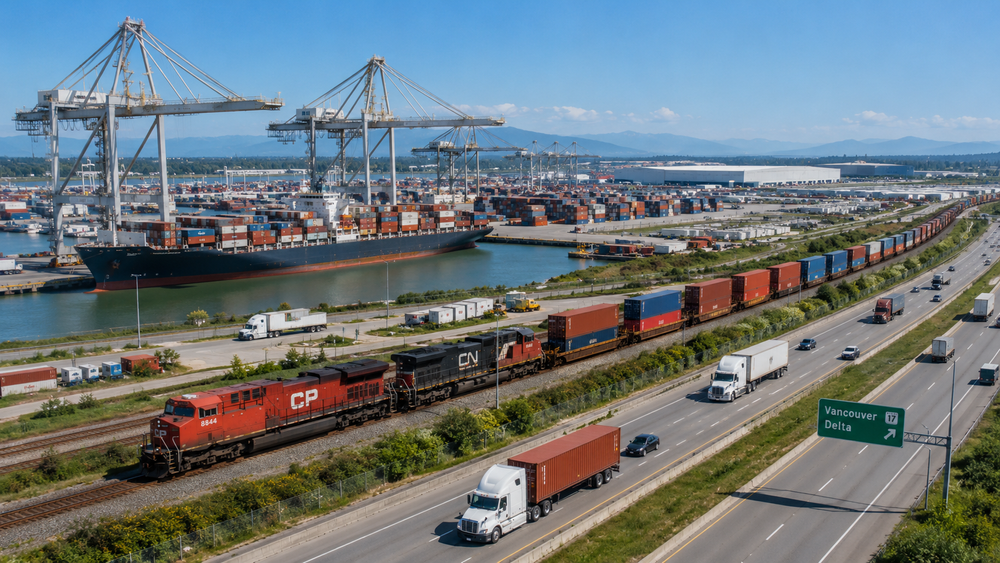
Roberts Bank is connected to national rail lines, major highways, distribution centres, manufacturing facilities and international shipping routes. Every day, products arriving in Delta begin journeys to communities and businesses across Canada and the United States. At the same time, Canadian exports leave Roberts Bank bound for markets throughout Asia and around the world.

More Than A Port

Roberts Bank is one part of Canada's Pacific Gateway.

Container ships arrive carrying thousands of products destined for retailers, manufacturers and consumers. Those containers are transferred to freight trains and transport trucks that move goods across the continent.

The system depends on precise coordination between shipping companies, railways, trucking firms, customs officials, logistics providers and port operators. A delay at one point in the chain can affect businesses hundreds or even thousands of kilometres away.

Why Delta Matters

Few Canadian communities occupy such a strategic location.

Highway 17 connects Roberts Bank with Highway 99, providing direct access to Metro Vancouver, the Fraser Valley and the United States.

CN and CPKC rail corridors connect the terminal with inland distribution centres across Canada.

Nearby Tilbury Industrial Park has become one of British Columbia's fastest-growing logistics and manufacturing centres, while the George Massey Tunnel replacement is expected to improve the movement of both commercial traffic and commuters.

Together, these assets make Delta one of Canada's most important transportation hubs.

By The Numbers

  • Canada's largest port handles trade with more than 170 economies.
  • Roberts Bank Terminal 2 will add approximately 2.4 million TEUs of annual container capacity.
  • The expansion is expected to increase Canada's West Coast container capacity by more than 30 percent.
  • Billions of dollars in goods move through Delta's transportation corridor each year.
  • Thousands of construction and long-term operational jobs are expected as the project advances.

What Most People Miss

Ports do not create economic value on their own.

Their value comes from everything connected to them.

Every warehouse, trucking company, rail line, customs broker, freight forwarder, engineering firm, equipment supplier, restaurant, hotel and local service business becomes part of the larger trade ecosystem.

As Roberts Bank grows, those opportunities extend far beyond the waterfront.

Why It Matters

Canada is working to diversify exports and strengthen trade relationships beyond the United States.

That strategy depends on reliable transportation infrastructure.

Roberts Bank is no longer simply a local port.

It has become a national economic asset that connects Canadian businesses with global markets.

For Delta residents, this means their community is playing an increasingly important role in Canada's future prosperity. The decisions made today about transportation, infrastructure and responsible growth will shape the region for decades.

Series: Delta At The Centre Of Canada's New Trade Economy


Robert Skinner

WBN News – Real-Time Intelligence For Business

Subscribe: https://deltacity.news/subscribe/?fpr=robert10

Contact: robertsinbiz@gmail.com

LinkedIn: https://www.linkedin.com/in/rlskinner/


Tags: #Delta City News #Roberts Bank #Pacific Gateway #Trade Corridor #Logistics #Transportation #Delta BC #Port Of Vancouver #Economic Development #Supply Chain

FACT CHECK REVIEW

  • Projected capacity increase and Roberts Bank Terminal 2 role should be verified against the Vancouver Fraser Port Authority before publication.
  • Transportation connections to Highway 17, Highway 99, CN and CPKC rail networks are established infrastructure.
  • Economic impacts are based on publicly stated project objectives and transportation planning.
  • Analysis distinguishes the strategic importance of the logistics network from verified infrastructure facts.

Share this article
The link has been copied!