By Robert Skinner | Delta City News | April 26, 2026
Subscribe Free To Delta City News: Click Here!
More Than Farming—An Economic Question
Delta’s greenhouse industry is often discussed in terms of food production and land use.
But there is another layer that deserves attention:
👉 What does it contribute to the local tax base?
As greenhouse operations expand, the answer becomes increasingly important—not just for agriculture, but for the broader community.
How Agricultural Land Is Typically Taxed in BC
In British Columbia, farmland that qualifies under BC Assessment’s farm classification benefits from preferential tax treatment.
This system is designed to:
- support agricultural production
- preserve farmland
- maintain food security
👉 It plays a central role in protecting farming across the province.
Where Greenhouses Fit Into the Picture
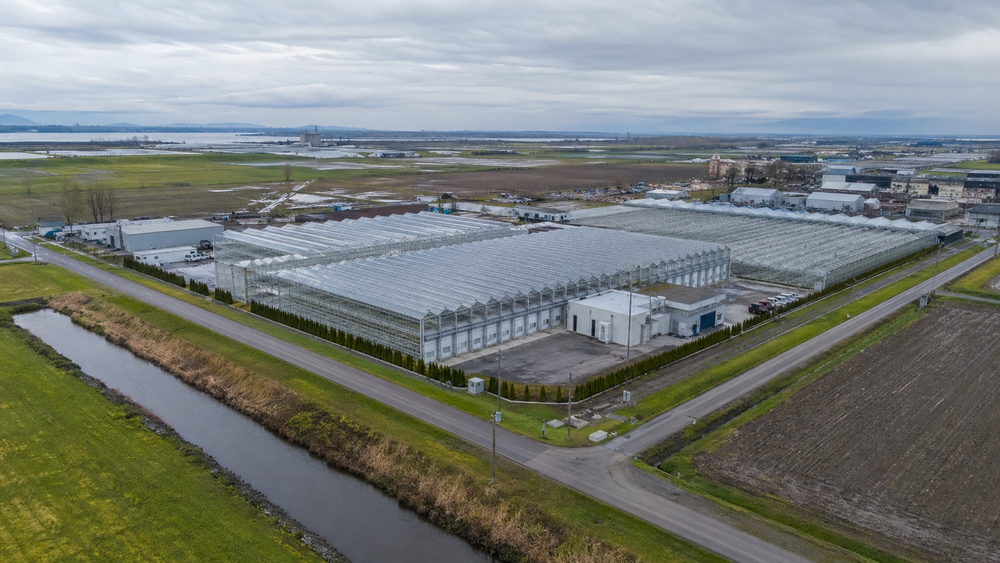
Greenhouse operations occupy a unique position within this system.
They are:
- agricultural in nature
- often located within the Agricultural Land Reserve (ALR)
- but significantly different in scale and structure from traditional farming
Unlike open-field agriculture, greenhouses involve:
- permanent or semi-permanent structures
- advanced growing systems
- higher production intensity
👉 Which leads to a more complex taxation picture.
A More Complex Tax Structure
Greenhouse properties are not always treated as a single category for taxation.
- The land itself may qualify for farm classification and benefit from lower agricultural tax rates
- The buildings and improvements—including greenhouse structures—may be assessed separately depending on their use and value
This creates a situation where greenhouse operations may contribute to the tax base differently than traditional farms.
👉 Not necessarily more or less—but differently.
Infrastructure and Service Considerations
As greenhouse operations scale up, they can increase demand on:
- local road networks
- drainage systems
- utilities and services
At the same time, the tax framework supporting agriculture is designed to encourage production—not necessarily to reflect infrastructure usage directly.
👉 This is where the discussion becomes more nuanced.
Economic Contribution Beyond Property Tax
Property taxation is only one part of the equation.
Greenhouse operations also contribute through:
- employment
- supply chain activity
- local and regional spending
- year-round economic stability
These indirect contributions can be significant—particularly in areas like Ladner, where proximity to operations matters.
A Balancing Act for Delta
For municipalities like Delta, the challenge is not straightforward.
It involves balancing:
- support for agricultural activity
- efficient use of land
- infrastructure costs
- and long-term revenue sustainability
These are policy-level considerations that evolve over time.
The Bottom Line
Delta’s greenhouse industry is established—and growing.
But how it contributes to the tax base is not a simple, one-size-fits-all answer.
👉 It reflects a hybrid model:
part agriculture, part large-scale production.
The Real Question
👉 As greenhouse operations continue to expand…
does the current tax framework still align with:
- the scale of operations
- infrastructure demands
- and long-term municipal needs?
Or will this become a larger conversation over time?
Having a Voice in What Comes Next
Property taxation and land classification in British Columbia are shaped by provincial systems and applied locally.
For residents and business owners, understanding how these frameworks work is key to following the conversation.
As Delta’s agricultural sector evolves, questions around fairness, contribution, and sustainability may become more visible—and more important.
Robert Skinner — Publisher, Delta City News
A Ladner-based business systems developer, Robert Skinner, leads Delta City News with a focus on delivering clear, relevant information for the local business and community landscape.
📞 +1 604-220-4750
📧 RSkinner@wbnn.news
🔗 Robert Skinner
Delta City News — Part of the WBN News Network
Why Join Video: Click Here
Apply To Be A Contributor Here:
🔎 Sources & References
- BC Assessment – Farm Classification
- BC Assessment – Property Classes
- Agricultural Land Commission (ALR)
- Corporation of Delta – Property Tax Framework
Tags: #Delta City News #Robert Skinner - Publisher #Delta Economy #Greenhouse Industry #Tax Base #Ladner #Local Government #Agriculture BC