By Leanna Wilson | Delta City News | April 27, 2026
Subscribe To WBN News: https://wbn.digital?fpr=robert10
A Waterway That Shaped Delta’s Past—and Its Future
At first glance, Canoe Pass—also known as Brunswick Point—appears to be a quiet stretch along the south arm of the Fraser River. But beneath its calm surface lies one of Delta’s most important intersections of Indigenous history, economic development, and modern land use.
Understanding this history is no longer optional. For local businesses, developers, and community leaders, it is becoming central to how decisions are made today.
Before Industry: A Model of Sustainable Stewardship
Long before modern Delta existed, the Hwlitsum people—a prominent group of the Hul'qumi'num-speaking nations and descendants of the Lamalchi—used Canoe Pass as a seasonal village.
This was not a temporary campsite. It was a structured, semi-permanent settlement built around one of the most valuable natural resources on the West Coast: sockeye salmon.
Their approach reflected a deep understanding of sustainability. Fishing practices and settlement patterns supported the region’s biodiversity for generations—long before “resource management” became a modern concept.
Displacement and a Turning Point in 1863
The trajectory of Canoe Pass changed dramatically in 1863.
A British naval attack on the Lamalchi village at Lamalcha Bay forced the community from their winter home on Penelakut Island. Unable to return, they remained in Canoe Pass year-round.
This event marked more than displacement—it opened the door to colonial land pre-emption. What had been an Indigenous-managed commons began transforming into segmented land for agriculture and, eventually, industrial use.
From Fishing Grounds to Industrial Engine
By the late 1800s, Canoe Pass had become a focal point of British Columbia’s booming canning industry.
Investors moved in quickly, drawn by the same natural advantages the Hwlitsum and Lamalchi had relied on for generations. Canneries multiplied, jobs were created, and Delta emerged as a significant player in global seafood exports.
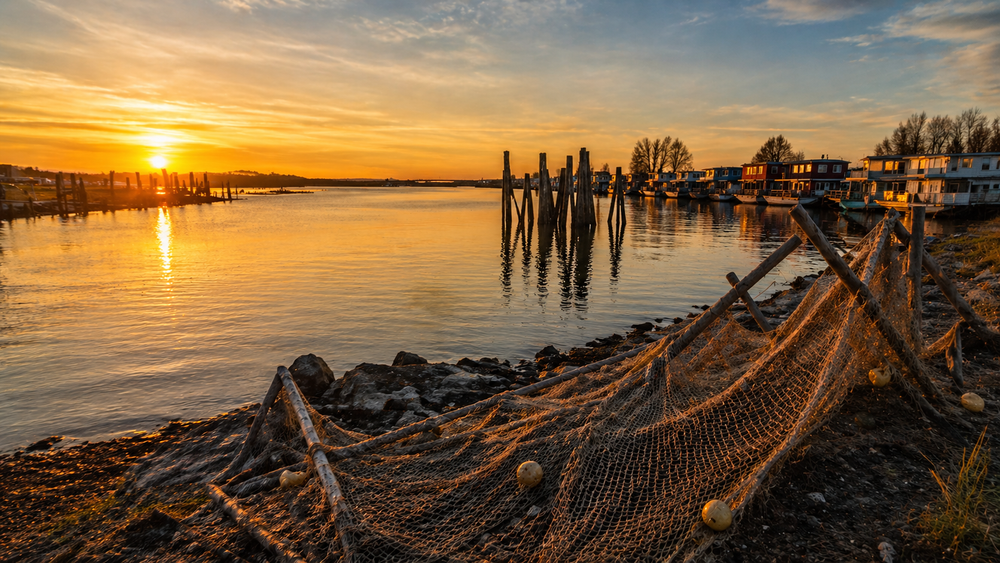
Today, traces of that era remain visible—weathered pilings, altered shorelines, and the continued commercial use of the Fraser River’s southern channels.
Why This History Matters to Business Today
This is where the story shifts from history to current reality.
With British Columbia implementing the Declaration on the Rights of Indigenous Peoples Act (DRIPA), development near Canoe Pass is no longer just about land and economics—it’s about accountability.
Businesses operating in the region are increasingly recognizing:
- Historical presence matters
- Indigenous rights remain active considerations
- Partnerships require awareness, not assumptions
Ignoring this context is no longer just risky—it can stall or derail projects entirely.
The Future: Balance, Not Replacement
Canoe Pass is now entering another phase.
Efforts are underway to:
- Protect remaining marshlands
- Maintain navigation for floatplanes and fishing vessels
- Integrate Indigenous leadership into land-use planning
This is not a return to the past—but it is a shift toward balance.
Indigenous knowledge is no longer treated as an afterthought. It is becoming a core component of environmental and economic planning in the region.
A Living Presence, Not Just History
The Hwlitsum community—approximately 300 members—remains active in the Delta area today.
Their work continues through legal, political, and cultural efforts to ensure their historical connection to Canoe Pass is formally recognized in land-use agreements and treaty discussions.
The Bottom Line for Delta
Canoe Pass is not just a historic site.
It is a working example of how:
- Indigenous stewardship
- Industrial development
- Modern policy
…all collide in one place.
For Delta’s business community, understanding that intersection isn’t just informative—it’s essential.
By: Leanna Wilson - Contributor to Delta City News
Subscribe to Delta City News for Free Here!
#Delta City News #Leanna Wilson #Canoe Pass #Hwlitsum First Nation #Delta BC History #Indigenous History #Fraser River #Local Business #Land Use #Reconciliation #Robert Skinner - Publisher