By Sherri Claydon| Vancouver City News | October 13, 2026

You can Subscribe To Delta City News for Free Click Here!

Republication Note
Originally published by Vancouver City News. Republished by Delta City News as part of the WBN News Network.

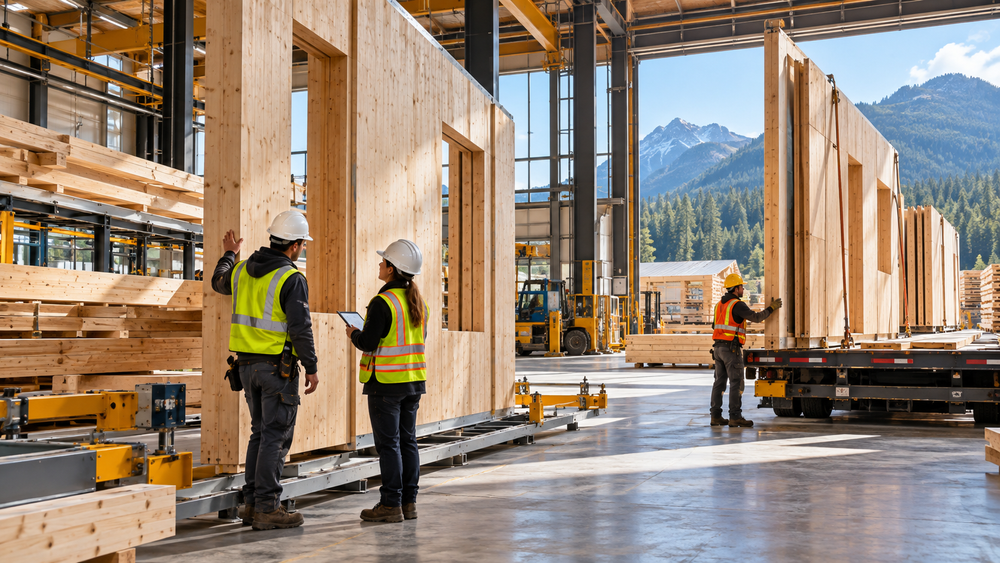
British Columbia's wood manufacturers are moving further into factory-made building components, opening opportunities for skilled jobs and new markets. The approach could also help builders improve housing construction.

B.C. has a long history of supplying wood for construction. Now, some manufacturers are producing more of the building itself, including walls, floors and structural panels that arrive at construction sites ready for installation.

That gives B.C. manufacturers an opportunity to sell higher-value products and gives builders more options for delivering housing. Two recent developments show what this can look like.

From Lumber to Building Components

On October 7, 2026, OT Timber Frames announced an expansion of its manufacturing operations in 150 Mile House, B.C., introducing a new structural wood panel designed for building construction.

The company reports having two projects in development using the panels in Wyoming and Montana, pointing to potential markets beyond the province.

Vienna House, a 123-unit affordable rental development in East Vancouver, uses prefabricated wall panels manufactured by TAG Panels in Squamish and mass-timber components supplied by Kalesnikoff in Castlegar.

By The Numbers

$1.3 billion: B.C.'s value-added wood manufacturing sector contributed more than this amount to provincial GDP in 2024. The figure covers a range of higher-value wood products, not only mass timber.

4,230 potential additional jobs: Provincial modelling projects approximately 2,350 additional manufacturing jobs and 1,880 jobs in technology, forestry, engineering and design by 2035 as the mass-timber industry develops.

Up to 10 new facilities: The equivalent number of additional mid-sized mass-timber manufacturing plants contemplated in B.C.'s industry projections for 2035.

$217 million: Capital investment associated with five mass-timber projects supported through B.C.'s Manufacturing Jobs Fund, according to the province's 2024 progress report.

25–30% faster construction: A U.S. Department of Energy-funded study of multi-unit housing found that buildings assembled from factory-made modules were completed 25% to 30% faster on average than comparable buildings constructed using conventional on-site methods.

About 7,300 more housing starts per year: CMHC estimates the Vancouver region would need approximately 27,300 housing starts annually from 2026 to 2036 to restore pre-pandemic affordability levels, compared with about 20,000 under its business-as-usual projection.

What Would It Take to Build at Scale?

For factory-built construction to grow, manufacturers need steady orders, reliable wood supply and building designs that can be produced efficiently.

Standardized components could help manufacturers serve multiple projects without starting from scratch each time. BC Housing is already applying lessons from Vienna House through its Digitally Accelerated Standardized Housing (DASH) program, which uses standardized designs and digital tools to improve housing delivery.

B.C. is also supporting value-added manufacturing. The province increased the share of BC Timber Sales supply dedicated to qualifying manufacturers from 10% to 20% in 2025 and expanded program eligibility in 2026.

Financing, insurance and industry experience remain important. Simon Fraser University has identified insurance and financing as barriers to wider mass-timber adoption. Changes to building codes, quality standards and training are also helping builders gain experience with these construction methods.

Why It Matters

For B.C.'s forestry and wood-products industry, producing more finished building components creates an opportunity to earn more value from wood products while expanding into specialized manufacturing.

That could mean more work for engineers, designers, manufacturing employees, equipment operators and businesses that transport and install these components.

B.C. also has opportunities beyond the province. It has an established position in North American mass-timber manufacturing, and companies developing products for customers in other markets could help expand that reach.

For Vancouver, factory-built components offer another way to improve housing construction. Manufacturing walls and structural panels in advance can reduce work on site and make building schedules more predictable when projects are well coordinated.

The shift is not simply about finding new uses for wood. It's about how much of the building B.C. companies can produce, how much of that work stays in the province and how effectively those products can support the homes communities need.

By Sherri Claydon | Vancouver City News

LinkedIn: https://www.linkedin.com/in/sherriclaydon

Source Information

Tags: # Sherri Claydon #Delta City News #British Columbia #Vancouver Housing #Wood Manufacturing #Prefabricated Housing #Mass Timber

Share this article
The link has been copied!