By Robert Skinner | Delta City News | March 16, 2026
Subscribe To WBN News: https://wbn.digital?fpr=robert10
Industrial expansion is not just about buildings. It is about payrolls, municipal revenue, and long-term economic stability.
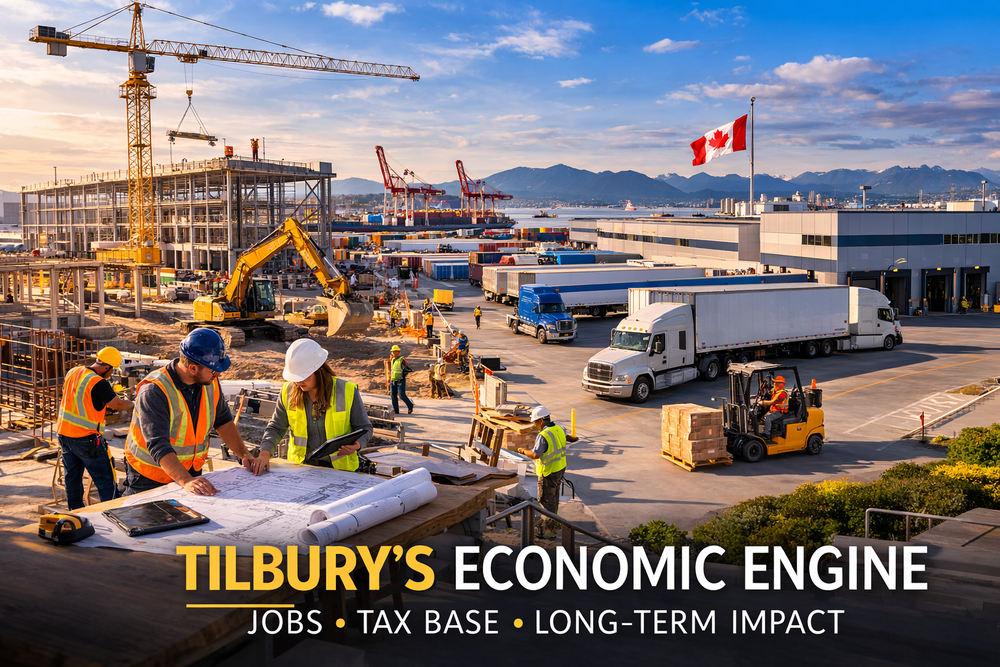
As Tilbury continues to expand, the economic effects will unfold in two distinct phases: construction impact and operational impact.
Phase One: Construction Surge
Large-format industrial development requires years of site preparation, servicing, and structural build-out. That translates into demand for:
- Heavy equipment operators
- Electricians
- Plumbers and pipefitters
- Concrete and steel crews
- HVAC specialists
- Civil engineering contractors
These projects often run in multi-year cycles, creating sustained employment rather than short-term bursts.
For local trades businesses in Delta and surrounding communities, this represents meaningful contract opportunity — particularly for those already certified and equipped to meet commercial safety standards.
Phase Two: Permanent Operations
Once operational, industrial facilities generate ongoing employment across logistics and distribution sectors.
Roles typically include:
- Warehouse managers
- Inventory and logistics coordinators
- Forklift operators
- Commercial drivers
- Fleet mechanics
- Safety supervisors
- Administrative and HR personnel
These positions may not always carry executive titles, but they provide steady middle-income employment — the kind that sustains households and supports the local economy.
Municipal Tax Implications
Industrial properties contribute significantly more property tax revenue per acre than residential land. For the City of Delta, that matters.
A stronger industrial tax base can help stabilize municipal finances and support infrastructure investment, public services, and long-term planning. Diversified revenue reduces reliance on residential tax increases.
The balance, however, is critical. Growth must be aligned with infrastructure capacity and environmental stewardship.
The Multiplier Effect
Industrial growth extends beyond the warehouse walls.
Local suppliers benefit:
- Equipment rental companies
- Safety training providers
- Accounting firms
- IT service providers
- Industrial cleaning contractors
- Security firms
Each new industrial tenant generates layers of secondary economic activity.
Tilbury’s expansion is not an isolated construction story. It is a structural shift in Delta’s economic footprint within the Lower Mainland.
The question for business owners and residents alike is simple:
Are we prepared to participate in the growth — or simply watch it happen?
Robert Skinner Publisher - Robert is a Ladner based business systems developer and the Publisher of Delta City News. Give him a call at +1 604-220-4750 or connect on LinkedIn: https://www.linkedin.com/in/rlskinner/
Note: We are looking for Citizen Journalist to write for this News Platform on a P/T Basis. Chat GPT training is available.
Tags: #Delta City News #Tilbury Jobs #Delta BC Economy #Industrial Development #Trade & Logistics #Local Business Growth