By Robert Skinner| Delta City News | March 10, 2026
Subscribe Free To Delta City News:
Click Here!

The 2000s marked the beginning of Delta’s modern era.

By the turn of the century, the foundations laid in previous decades — agricultural protection, ferry expansion, port development, and suburban growth — were no longer separate stories. They had converged into a complex, strategically important municipality with regional and national significance.

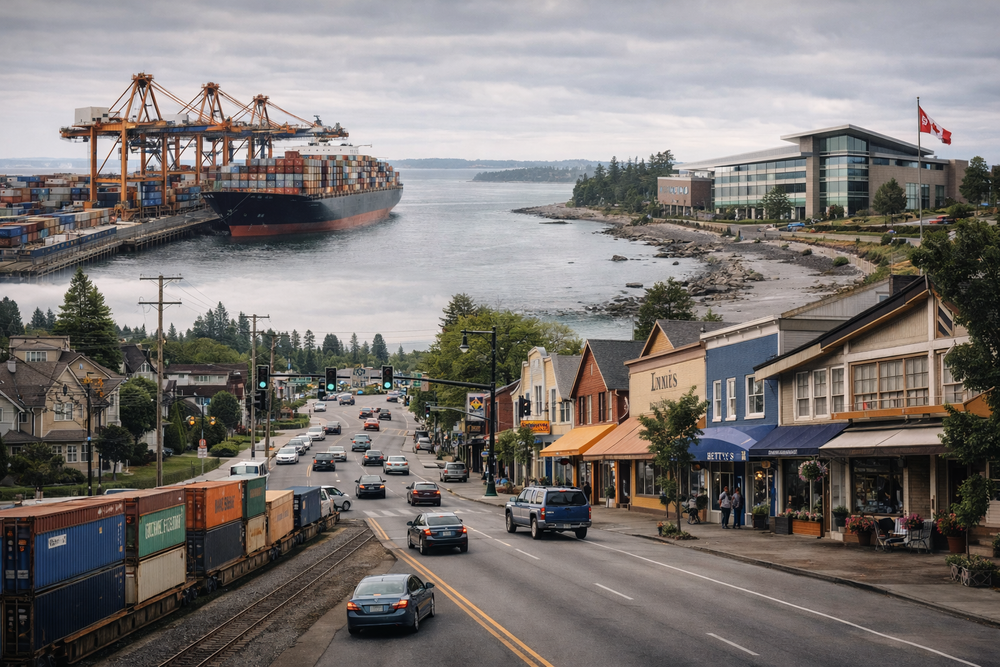
One of the most consequential structural changes came in 2008 with the formation of the Vancouver Fraser Port Authority, consolidating several Lower Mainland port operations into a single federal authority. This reorganization elevated Roberts Bank’s importance within Canada’s Pacific trade strategy and formalized Delta’s role in global supply chains.

Container traffic continued expanding. Rail infrastructure modernized. Logistics activity intensified around Tilbury Industrial Park and along key industrial corridors. Delta was no longer just host to port activity — it was embedded within an international trade ecosystem.

At the same time, residential and commercial pressures increased across the city.

SPONSORED

Ad: Learn About Being A Writer For Free & The Benefits Click Here

North Delta experienced growing integration with Surrey and the broader Metro Vancouver urban framework. Commercial corridors along Scott Road evolved, and discussions around density, transportation, and community services became more prominent.

In South Delta, Ladner and Tsawwassen maintained their distinct identities while navigating retail evolution, housing demand, and transportation realities tied to ferry and highway access.

A historic governance milestone also reshaped the local landscape. In 2009, the Tsawwassen First Nation finalized its modern treaty, establishing self-governance and opening a new chapter in economic development, land management, and regional partnership. This development added a new dimension to Delta’s economic and civic structure in the 21st century.

By the end of the decade, Delta had matured into a city balancing four powerful forces:

• Agricultural preservation
• Port and industrial expansion
• Suburban and urban residential growth
• Indigenous governance and economic participation

The 2000s did not radically alter Delta’s identity.

They solidified it.

The decades ahead would test how well those forces could coexist.


Robert Skinner- Robert is a Ladner based business systems developer and the Publisher of Delta City News. Give him a call at +1 604-220-4750 or connect on LinkedIn: https://www.linkedin.com/in/rlskinner/

Note: We are looking for Citizen Journalist to write for this News Platform on a P/T Basis. Chat GPT training is available.

Give Robert a call. Let’s connect and message him on LinkedIn if you are interested to learn more.

Tags: #Delta BC #Delta History #2000s #Vancouver Fraser Port Authority #Tsawwassen First Nation #North Delta #Tilbury Industrial Park #Local Government #Delta City News

Share this article
The link has been copied!