By Robert Skinner | Delta City News | March 9, 2026
Subscribe Free To Delta City News:
Click Here!

If the 1960s brought rapid suburban expansion and transportation growth, the 1970s introduced something equally powerful, restraint.

Across British Columbia, concerns were rising about unchecked urban sprawl and the loss of productive farmland. In Delta, where agriculture had long been a foundational industry, those concerns carried particular weight.

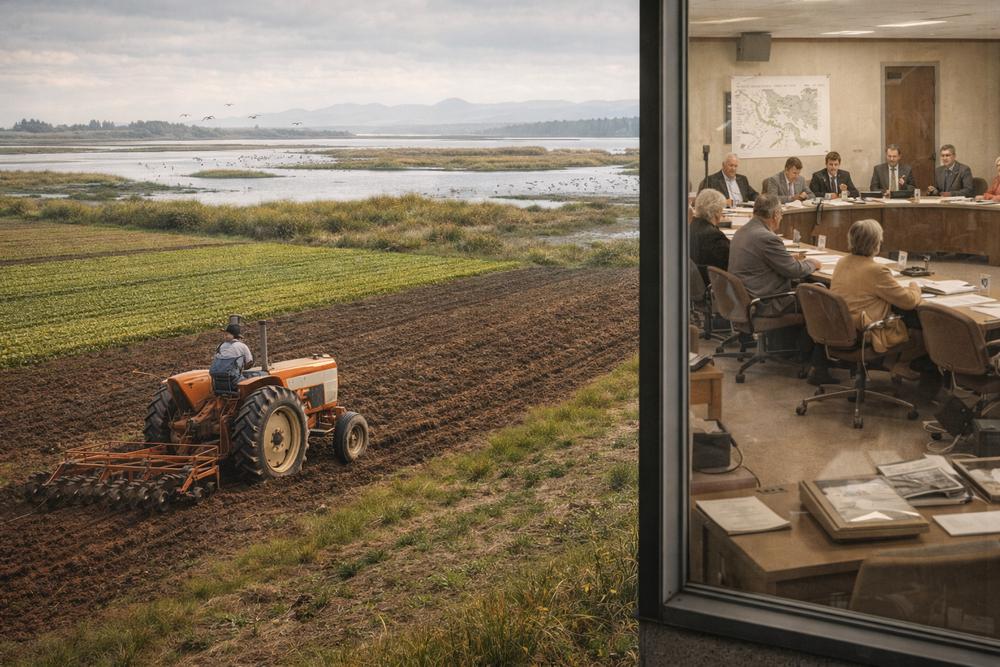
The defining moment came in 1973 with the creation of the Agricultural Land Reserve under the provincial government of Dave Barrett. The Agricultural Land Reserve (ALR) was designed to protect farmland from being consumed by development. Large portions of Delta’s rich agricultural land base were placed under protection, restricting non-farm uses and reshaping the future of land development.

This legislation had long-term implications.

Ad: Affiliate Income Opportunity - AMP Payment System Click Here

For farmers, it provided certainty that agriculture would remain a viable industry. For developers, it introduced limits. For municipal planners, it required a more disciplined approach to growth. Delta could expand — but not endlessly and not at the expense of its agricultural backbone.

Environmental awareness also began gaining traction during the 1970s. Public attention turned toward wetlands, wildlife habitats, and coastal ecosystems. Areas that had once been viewed primarily through an industrial or expansion lens were increasingly recognized for ecological value. This shift would later influence park development, shoreline protections, and regional planning policies.

Municipally, Delta continued evolving as a structured local government. Planning processes became more formalized. Zoning decisions, infrastructure investments, and community consultations began shaping long-term development patterns. Ladner maintained its historic village character, Tsawwassen continued as a suburban and ferry gateway community, and North Delta expanded closer to the urban edge of Surrey.

The 1970s did not produce the dramatic infrastructure headlines of previous decades. Instead, it produced something more enduring: policy decisions that still define Delta today.

Farmland remained farmland. Growth became more intentional. Environmental considerations entered the public conversation.

The stage was set for the economic shifts and port-driven industrial expansion that would intensify in the 1980s.


Robert Skinner- Robert is a Ladner based business systems developer and the Publisher of Delta City News. Give him a call at +1 604-220-4750 or connect on LinkedIn: https://www.linkedin.com/in/rlskinner/

Note: We are looking for Citizen Journalist to write for this News Platform on a P/T Basis. Chat GPT training is available.

Give Robert a call. Let’s connect and message him on LinkedIn if you are interested to learn more.

Tags: #Delta City News #Robert Skinner Publisher #Delta History #South Delta #Delta BC #1970s #Agricultural Land Reserve #Farmland Protection #Local Government

Share this article
The link has been copied!