By Robert Skinner | Delta City News | March 9, 2026
Subscribe Free To Delta City News: Click Here!
The 1950s marked a defining decade for Ladner and Tsawwassen. In the years following World War II, returning veterans and young families began settling in Delta in increasing numbers, triggering a housing boom and reshaping what had long been primarily rural and fishing-based communities.
Ladner, already established as a fishing and agricultural hub, began expanding residentially. Meanwhile, Tsawwassen started emerging as a more structured residential area, supported by new subdivisions and services. Population growth drove demand for schools, retail shops, municipal services, and professional trades. Local entrepreneurs stepped forward to meet those needs, laying foundations for businesses that would anchor the community for decades.
AMP video: Looking to Reduce Your Credit Card Fees? Click here
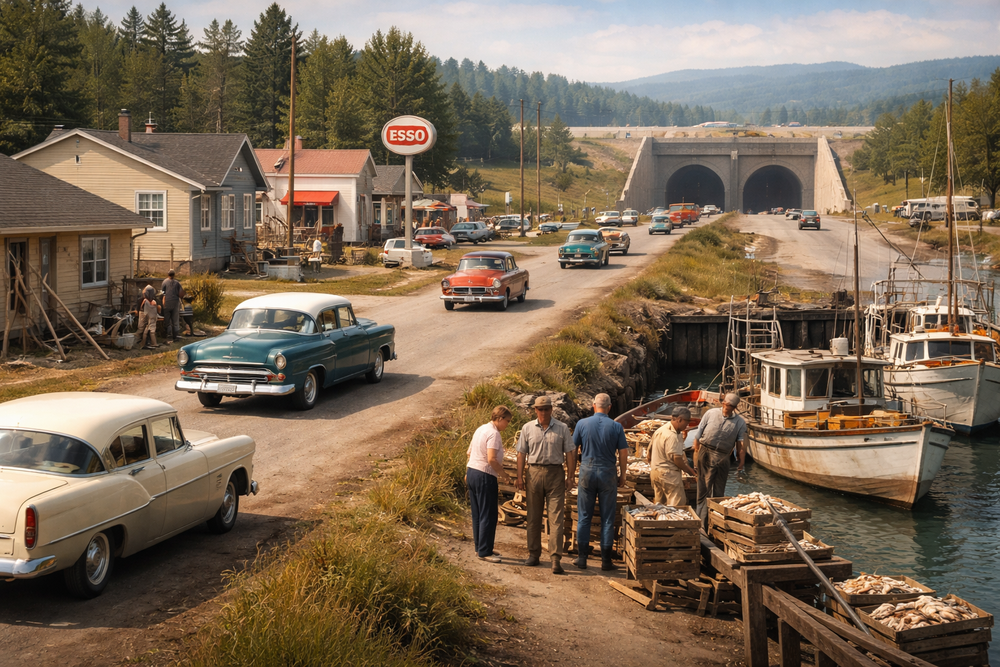
One of the most transformative infrastructure milestones was the opening of the George Massey Tunnel in 1959. Prior to that, the Deas Island Ferry served as the primary connection between Delta and Richmond. The ferry was essential but limited weather delays, restricted capacity, and long wait times constrained both commuters and commercial transport.
The tunnel changed everything.
With a direct road link beneath the Fraser River, travel times dropped and reliability improved dramatically. For Ladner and Tsawwassen businesses, this meant easier access to the broader Vancouver market, improved supply chains, and new customer flow. What had felt geographically distant suddenly became strategically positioned.
Automobile ownership accelerated this transformation. As families purchased cars in greater numbers, service stations, repair shops, and drive-in businesses appeared along key corridors. Mobility reshaped consumer patterns and strengthened ties between Ladner, Tsawwassen, Richmond, and Vancouver.
Fishing remained central to the local economy. Ladner’s established canneries continued operations, while smaller fishing and processing activities expanded throughout South Delta to meet rising seafood demand in the Lower Mainland. Agriculture also remained strong, supported by improved transport routes that allowed farmers to move goods more efficiently.
By decade’s end, Ladner and Tsawwassen were no longer isolated rural communities. The 1950s positioned South Delta as an emerging contributor to the regional economy connected, growing, and increasingly confident in its future.
The groundwork had been laid for the suburban expansion that would follow in the 1960s and beyond.
Robert Skinner- Robert is a Ladner based business systems developer and the Publisher of Delta City News. Give him a call at +1 604-220-4750 or connect on LinkedIn: https://www.linkedin.com/in/rlskinner/
Note: We are looking for Citizen Journalist to write for this News Platform on a P/T Basis. Chat GPT training is available.
Give Robert a call. Let’s connect and message him on LinkedIn if you are interested to learn more
Tags: #Delta City News #Delta History Series #Local Business History #South Delta #Delta #Ladner B.C. #Tsawwassen #1950s