By Robert Skinner | Delta City News | April 21, 2026
Subscribe Free To Delta City News: Click Here!
A Quiet Transformation on Delta’s Farmland
For generations, Delta has been known for its rich agricultural land.
Fields of potatoes, vegetables, and dairy operations once defined much of the landscape—particularly in Ladner and surrounding areas.
But over the past few decades, a quieter transformation has taken place.
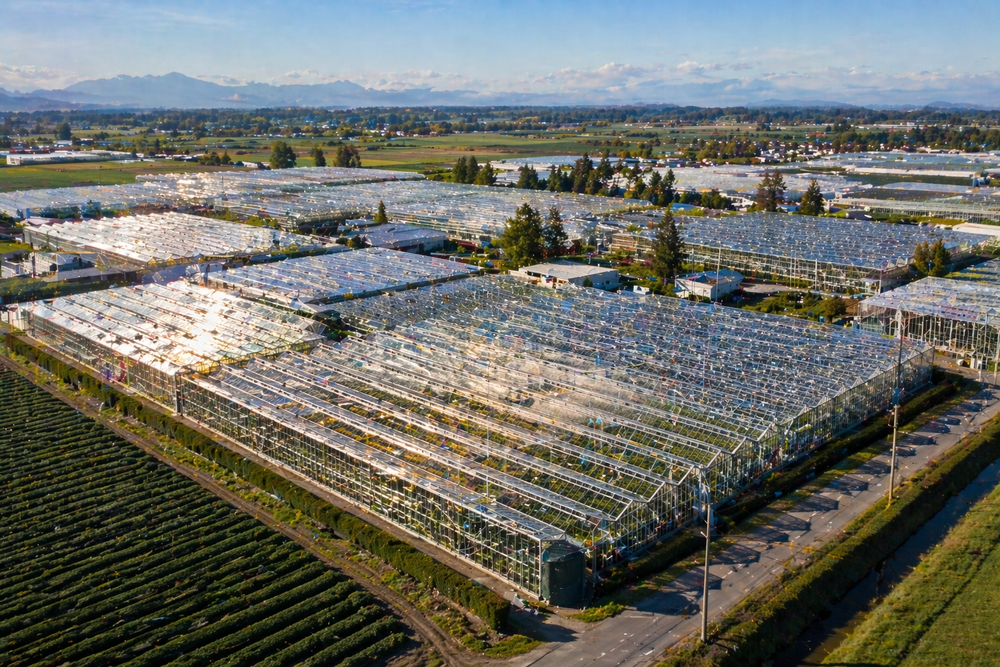
👉 Farming in Delta has increasingly moved from soil… to glass.
Why Delta Was the Perfect Fit
The shift toward greenhouse agriculture didn’t happen by accident.
Delta offers a rare combination of advantages:
- fertile land protected by the Agricultural Land Reserve (ALR)
- proximity to major transportation routes
- access to Metro Vancouver markets
- relatively mild coastal climate
Together, these factors created ideal conditions for a different kind of farming—one that could operate year-round.
The Rise of Controlled Environment Agriculture
Greenhouses allow farmers to control:
- temperature
- humidity
- irrigation
- growing cycles
This means crops can be produced:
👉 more consistently
👉 more efficiently
👉 and often at a higher yield per acre
In many cases, a single greenhouse operation can produce significantly more output than traditional open-field farming on the same land.
From Family Farms to Larger Operations
As the industry evolved, so did the structure of farming in Delta.
Where once small, family-run farms dominated, greenhouse agriculture has often required:
- higher capital investment
- advanced technology
- larger-scale operations
This has led to a gradual shift toward:
- larger producers
- more specialized operations
- integration with broader supply chains
👉 A different model of agriculture—more industrial, more technical.
A New Role in the Regional Economy
Today, Delta’s greenhouse sector plays a significant role in:
- supplying fresh produce year-round
- supporting export markets
- contributing to local employment
- driving agricultural innovation
For the local economy, this represents:
👉 stability in production
👉 expanded economic activity
👉 and a stronger connection to global markets
But Not Without Questions
As greenhouse agriculture has grown, so have discussions around its impact.
Key questions include:
- how it affects traditional farming
- how land is being used within the ALR
- the balance between efficiency and sustainability
- and how benefits are distributed locally
These are not new questions—but they are becoming more relevant as the industry expands.
The Bottom Line
Delta has not stopped being an agricultural community.
👉 It has evolved into a different kind of one.
From open fields to high-tech glass structures, the region is now part of a broader shift toward controlled, efficient food production.
The Real Question
👉 As greenhouse agriculture continues to grow…
what does that mean for:
- traditional farming
- land use in Delta
- and the long-term shape of the local economy?
Because the transformation is already well underway.
Having a Voice in What Comes Next
Agricultural land use in Delta is shaped by a combination of local planning, provincial policy, and market forces.
For residents and business owners, understanding how these factors interact is key to following the conversation.
As the greenhouse industry continues to expand, awareness may be the first step in understanding how these changes affect the community as a whole.
Robert Skinner Publisher - Robert is a Ladner based business systems developer and the Publisher of Delta City News.
Give him a call at +1 604-220-4750 or connect on LinkedIn: https://www.linkedin.com/in/rlskinner/
Note: We are looking for Citizen Journalist to write for this News Platform on a P/T Basis. Chat GPT training is available. To Apply: Click Here
🔎 Sources & References
- Agricultural Land Commission (ALR) – British Columbia
- BC Ministry of Agriculture
- Local agricultural and greenhouse industry reports
#Delta City News # Robert Skinner - Publisher # Delta Agriculture # Greenhouse Farming # Ladner # ALR # Local Economy # Farming BC # Food Production